Seven Apocalypses, One Diner: The Quiet Case for Pop's as Riverdale's True Protagonist
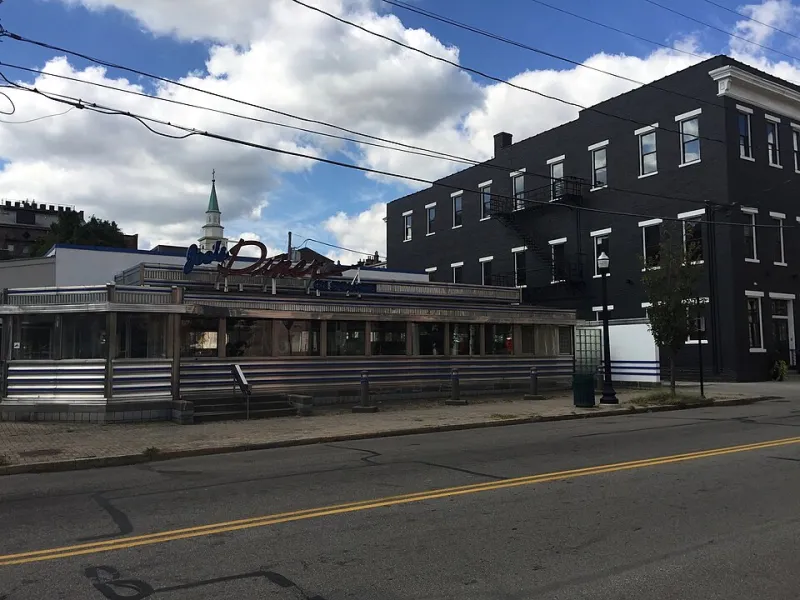
Photo: Warren LeMay from Cincinnati, OH, United States, CC0, via Wikimedia Commons
Archie survived a bear attack. Betty survived a sister, a serial killer brother, and her own darkness. Jughead survived being dead for a while there. But none of them survived everything. Only one resident of Riverdale made it through all seven seasons with its identity fully intact, and it served burgers the entire time.
Pop's Chock'lit Shoppe is the main character of Riverdale. I will not be taking questions.
The One Place That Never Lied
Every other location in Riverdale eventually betrayed its purpose. The high school hosted a cult. Thornhill hosted a family of drug manufacturers. Even the Sheriff's station became a rotating door of corruption and murder confessions. But Pop's? Pop's stayed Pop's. The milkshakes were cold, the booths were red, and the neon never flickered out — even when the town was literally on fire behind it.
In a show built on reversal and betrayal, that consistency wasn't boring. It was load-bearing. When everything else on screen was chaos, the diner was the audience's proof that something in this universe was stable.
The Symbolism Was Doing Overtime
Riverdale's whole aesthetic engine was retro Americana — the show dressed 2017 in the 1950s and asked everyone to act natural. Pop's was the centerpiece of that thesis. It represented an idealized small-town America that, in the show's own telling, never actually existed. The diner glowed while the town underneath it rotted, and that contrast was the show's commentary: the Americana we're nostalgic for was always a facade over something darker.
And the show knew it. That's why the writers kept sending the worst moments of the series through those doors. Gunshot? Pop's. Drug deals? Pop's. The Black Hood's shadow falling across a waitress? Pop's. If something needed to hurt, it happened under that neon.
Every Major Plot Twist Came With a Side of Fries
Run the checklist. Betty and Jughead's whole dynamic lived at a corner booth. The Southside Serpents used it as neutral ground. Hiram's schemes circled it. The gang's core friend group basically held every meeting there, which means the diner functioned as a war room, a confessional, and a safe house simultaneously — often in the same episode.
There's a fan theory (a good one) that Pop's is the show's true narrator's home base, the fixed point around which every timeline spun. It sounds like a joke until you notice how often the camera returned to that counter between catastrophes, like the show itself checking in to make sure we were okay.
Why It Mattered That It Survived
By the final season, when the show had jumped time periods and logic, Pop's remained. And when the series ended, it ended at the diner — the one place where every character, every era, and every version of the story could sit down together.
That's not set design. That's a thesis. Riverdale was never really about murder mysteries or serial killer genes or superpowers. It was about a group of people who kept coming back to one warm room, even when the world outside stopped making sense. The diner held them together because the show was, at its heart, about the fantasy that someplace like Pop's could exist — a place where the milkshakes are cold, the lights stay on, and everyone you love eventually walks back through the door.
The characters came and went. The diner stayed. Main character behavior, honestly.