The Buildings Know What They Did: Riverdale's Most Cursed Locations, Ranked by Damage Done
Riverdale is a town full of terrible people making terrible choices, and it would be easy to lay the blame entirely at their feet. But spend enough time watching the show — or rewatching it, which is its own particular experience — and you start to notice something. The locations aren't neutral. They're not just backdrops. They have a relationship with the chaos that unfolds inside them, and that relationship is almost disturbingly consistent.
Certain buildings in Riverdale don't just witness tragedy. They seem to invite it. They accumulate trauma the way old houses accumulate dust — quietly, persistently, until it's everywhere and you can't remember what the place looked like before.
So let's talk about the geography of disaster. Because if Riverdale has taught us anything, it's that the zip code matters.
Thornhill: The House That Was Always the Problem
Start here. You have to start here.
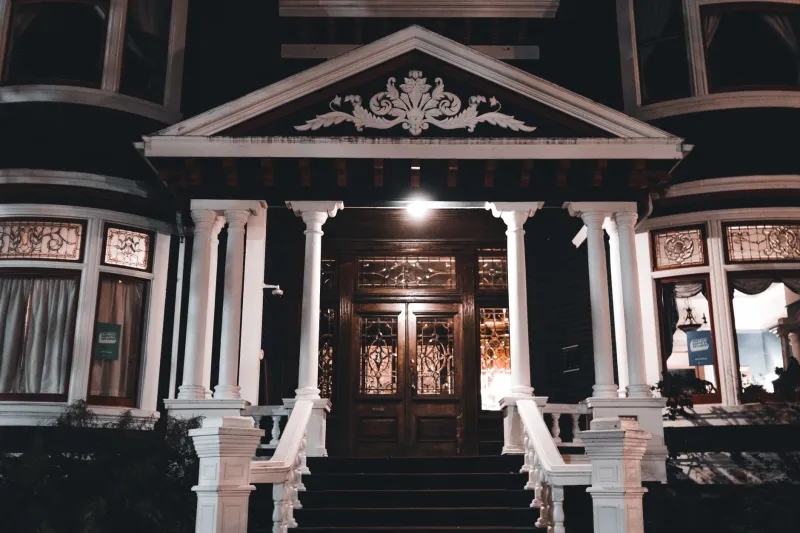
Thornhill is the single most narratively loaded location in the entire series, and it's not particularly close. The Blossom family estate functions less like a home and more like a character with its own agenda — one that is uniformly, enthusiastically malevolent. The Gothic architecture, the maple syrup empire rotting beneath the surface, the family secrets that compound across generations: Thornhill doesn't just contain darkness, it produces it.
Cheryl's arc is inseparable from the house. Her evolution from icy mean girl to something more complex and genuinely compelling runs parallel to her relationship with Thornhill — a place that shaped her into who she was, nearly destroyed her, and that she eventually had to burn down (literally) to survive. The fact that she then rebuilt it and moved back in says everything you need to know about how Riverdale uses location as character.
Thornhill didn't burn because the plot required spectacle. It burned because the house had become synonymous with everything that needed to end. And then it came back, because in Riverdale, things don't stay gone.
The Andrews House: The Eye of Every Storm
On the surface, the Andrews house is supposed to be the safe one. The warm one. Fred Andrews built it into a refuge, a place where kids could show up with nowhere else to go and find a plate of food and a couch. That's not incidental — the show spent real time establishing the Andrews home as the emotional center of the series.
Which makes it all the more telling that the house never actually stayed safe.
Archie's address becomes a magnet for violence, intrusion, and crisis across the run of the show. It's broken into, threatened, and surrounded by disaster so regularly that the warmth of the space starts to feel almost ironic — like the show is commenting on the limits of good intentions in a town this thoroughly compromised. The Andrews house tries to be a haven. Riverdale won't let it.
And after Fred's death — both in the story and in the real-world tragedy of Luke Perry's passing — the house carries that grief visibly. It becomes a monument as much as a home. The warmth is still there, but it's haunted.
Pop's Chock'lit Shoppe: Innocence as a Target
Pop's is the show's most deliberate piece of Americana — a diner that looks like it was designed to represent everything wholesome and uncomplicated about small-town life. Red booths, milkshakes, a jukebox. It's nostalgic to the point of being almost theatrical.
So of course it's where the show keeps sending its darkest moments.
Pop's gets robbed. It becomes a front for criminal enterprise. It serves as the backdrop for confessions, confrontations, and at least a few genuinely traumatic scenes that have no business happening in a place with that much checkered tile. The diner's persistent cheerfulness in the face of everything the show throws at it becomes its own kind of commentary — a visual joke that isn't quite funny, about the gap between the Riverdale people imagine and the one they actually live in.
Fans have long read Pop's as a symbol of lost innocence, which is exactly what the show intends. But there's something more specific happening too. Pop's is where characters go when they need to feel normal, and the show keeps reminding them — and us — that normal isn't available in this town.
The Whyte Wyrm and the Speakeasy: Spaces That Corrupt on Contact
Riverdale has a recurring architectural type: the underground venue. The Whyte Wyrm, the various speakeasies and performance spaces that come and go across the seasons, the Babylonium. These places share a function in the show's geography. They're where the rules stop applying.
Characters enter these spaces and make choices they wouldn't make anywhere else. Alliances form and dissolve. Violence erupts. Secrets surface. There's a reason so many of the show's pivotal scenes happen in dim, underground, or otherwise liminal spaces — the architecture signals that you're outside the normal social order, which means anything can happen.
The Wyrm in particular accumulates Serpent mythology and trauma in equal measure. It's a community space and a crime scene. It's where loyalty gets tested and usually fails. Fans who've mapped the show's key moments against its locations know that the Wyrm shows up in the background of a disproportionate number of the series' worst decisions.
Riverdale High: The Institution That Never Protected Anyone
Schools in teen dramas are supposed to be the arena — the place where the social dynamics play out, where coming-of-age happens, where the story is set in motion. Riverdale High does all of that, technically. But it also does something the genre doesn't usually allow: it fails its students, consistently and completely, in ways that the show treats as structural rather than accidental.
The principal's office, the student lounge, the Blue and Gold newsroom — these spaces host moments that should feel formative and often feel sinister instead. The school doesn't protect its students from the town's darkness. It participates in it. Teachers are corrupt or absent. Institutions that should intervene don't. The building itself starts to feel less like a school and more like a holding pen.
What the Map Is Actually Telling Us
When you lay out Riverdale's locations and trace what happens in each of them, a picture emerges that's hard to dismiss as coincidental. The show has built a geography of trauma — a town where every significant space carries the weight of what's happened there, and where that weight actively shapes what happens next.
This is sophisticated worldbuilding, even when it doesn't look like it. The locations in Riverdale aren't neutral containers. They're participants. They remember. And in a show where human characters are constantly rewritten, reset, or removed, the buildings provide a strange kind of continuity.
The town doesn't forget, even when the story tries to move on. The walls hold it.
And if you've ever rewatched the series and felt something shift when a familiar location appeared on screen — a low-level dread, a recognition of what that place has already cost — then you know exactly what we're talking about.